Practical guides on microcement applications, costs, maintenance and design in Singapore.Microcement Guides & Insights
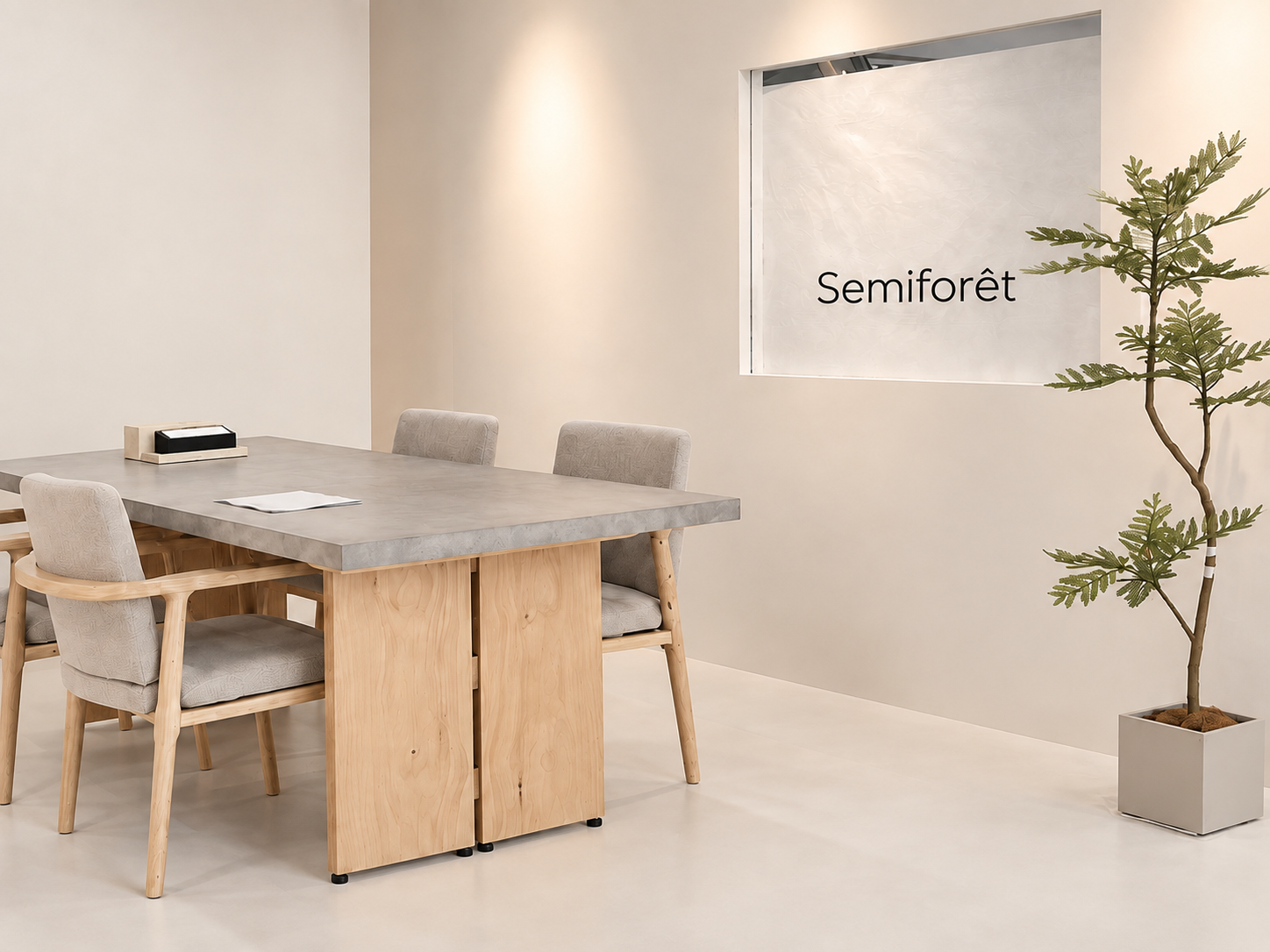
Before Your Microcement Site Assessment
Prepare your floor plan, site photos, surface history and design references for a more useful first conversation about your microcement project.

One Material Across Walls, Floors & Ceilings
Microcement can create visual continuity across walls, floors and ceilings. Learn how each surface still needs its own substrate, detailing and protection plan.
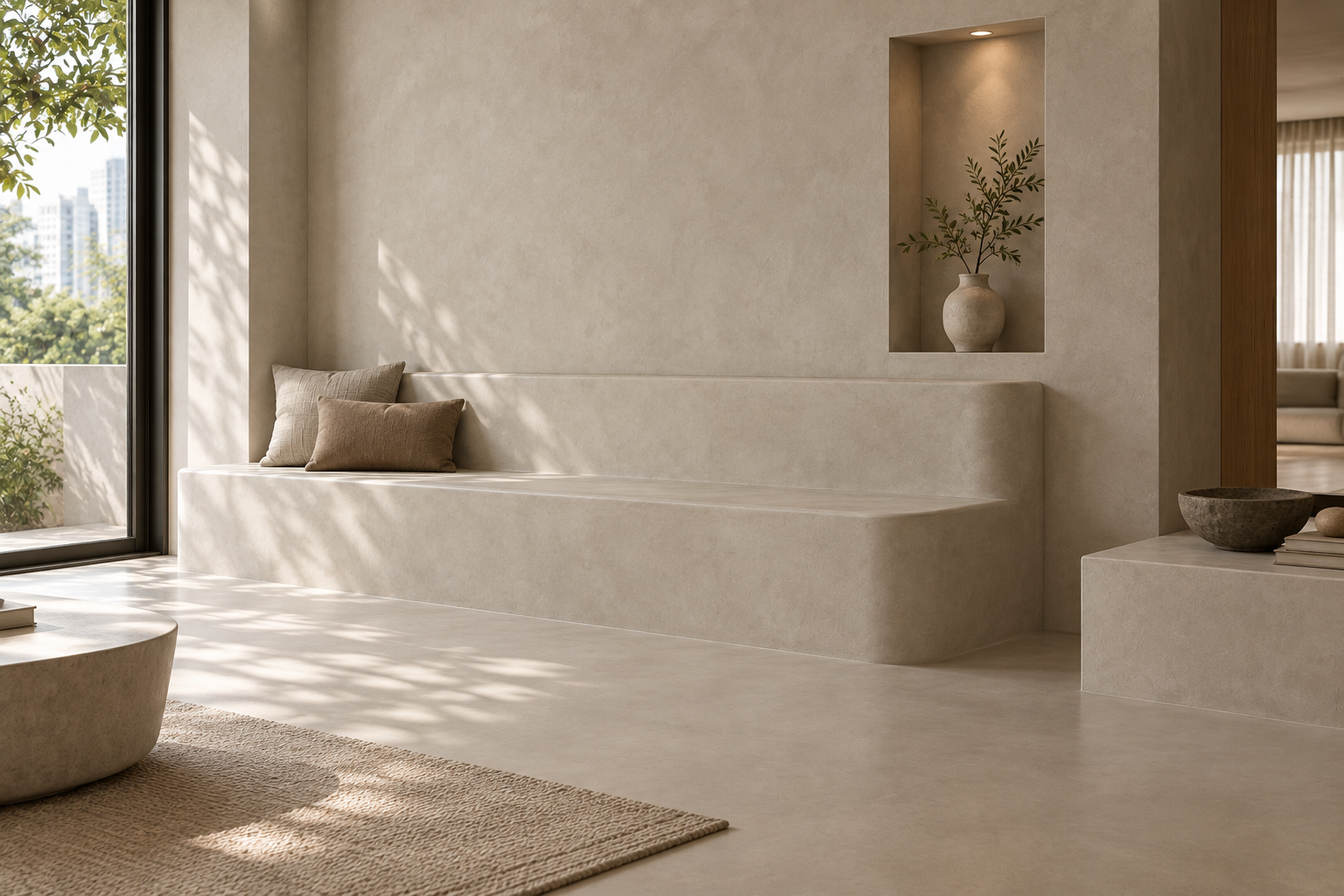
Microcement for Built-In Furniture and Selected Custom Surfaces
Learn where microcement may suit built-in benches, vanities, niches and display plinths—and what to check about substrate, edges, heat, water and impact.
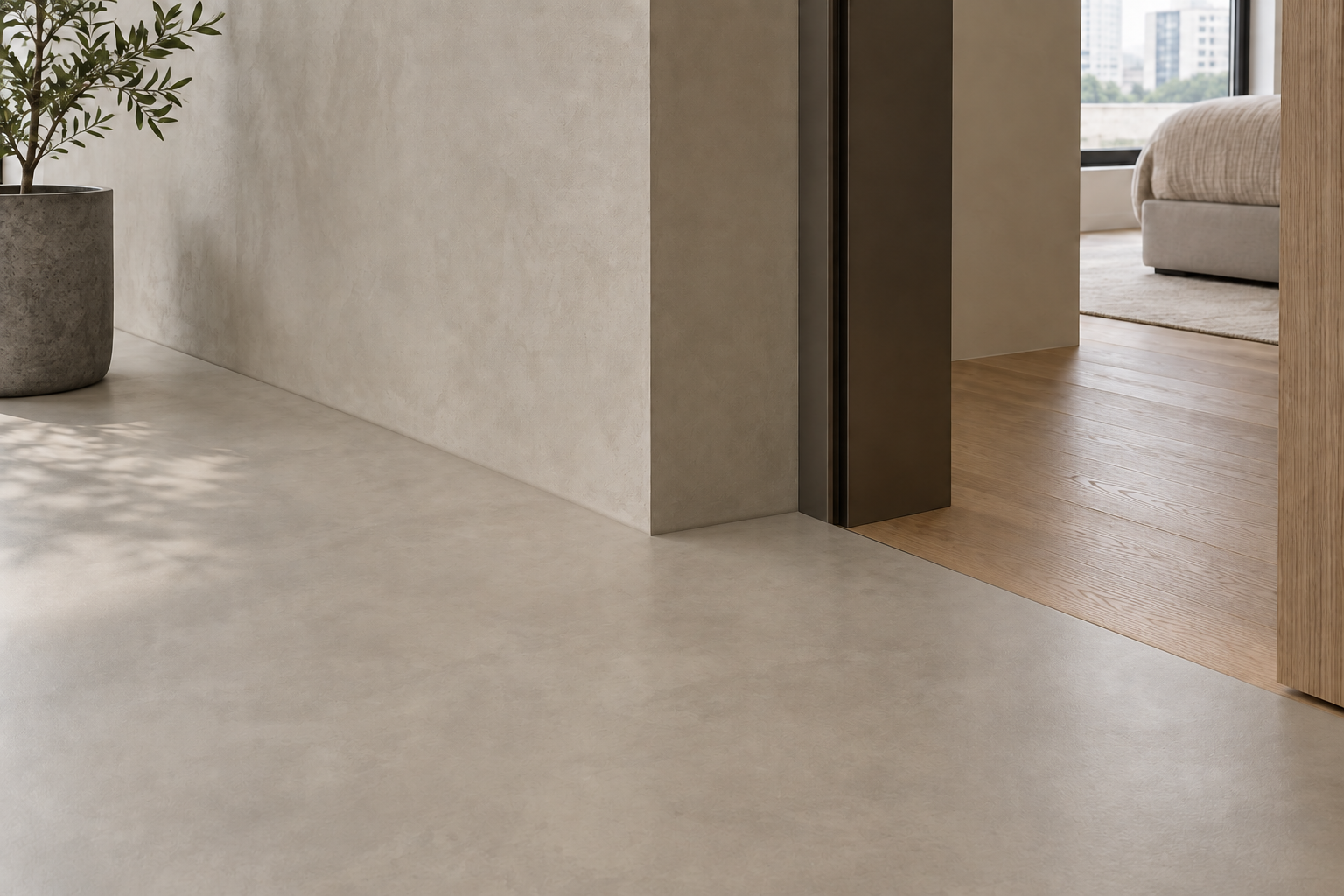
Microcement Details: Joints, Skirting, Shadow Gaps and Transitions
Learn how to plan microcement joints, skirting, shadow gaps, thresholds and material transitions without confusing visual continuity with hidden movement.
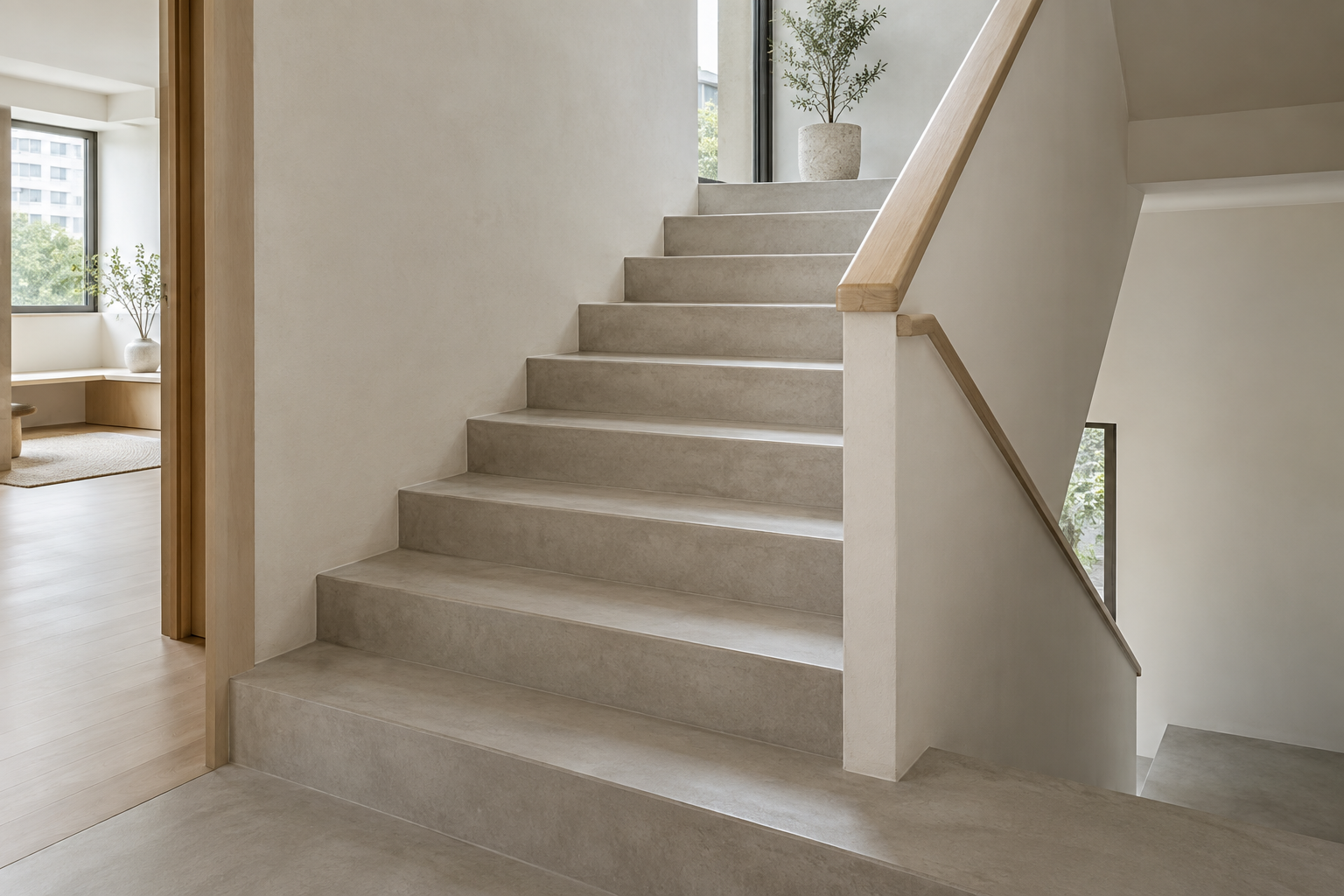
Microcement for Stairs in Singapore: Edges, Traffic and Substrate
Microcement can be considered for staircases when the substrate, treads, risers, nosings, landings and transitions are assessed as one system. Stairs concentrate foot traffic and edge contact, so a stair specification should not simply copy a flat-floor build-up. The route depends on substrate stability, geometry, slip considerations, protection, lighting and maintenance; unresolved cracks, movement or weak edges need separate remedial decisions before decorative work begins.
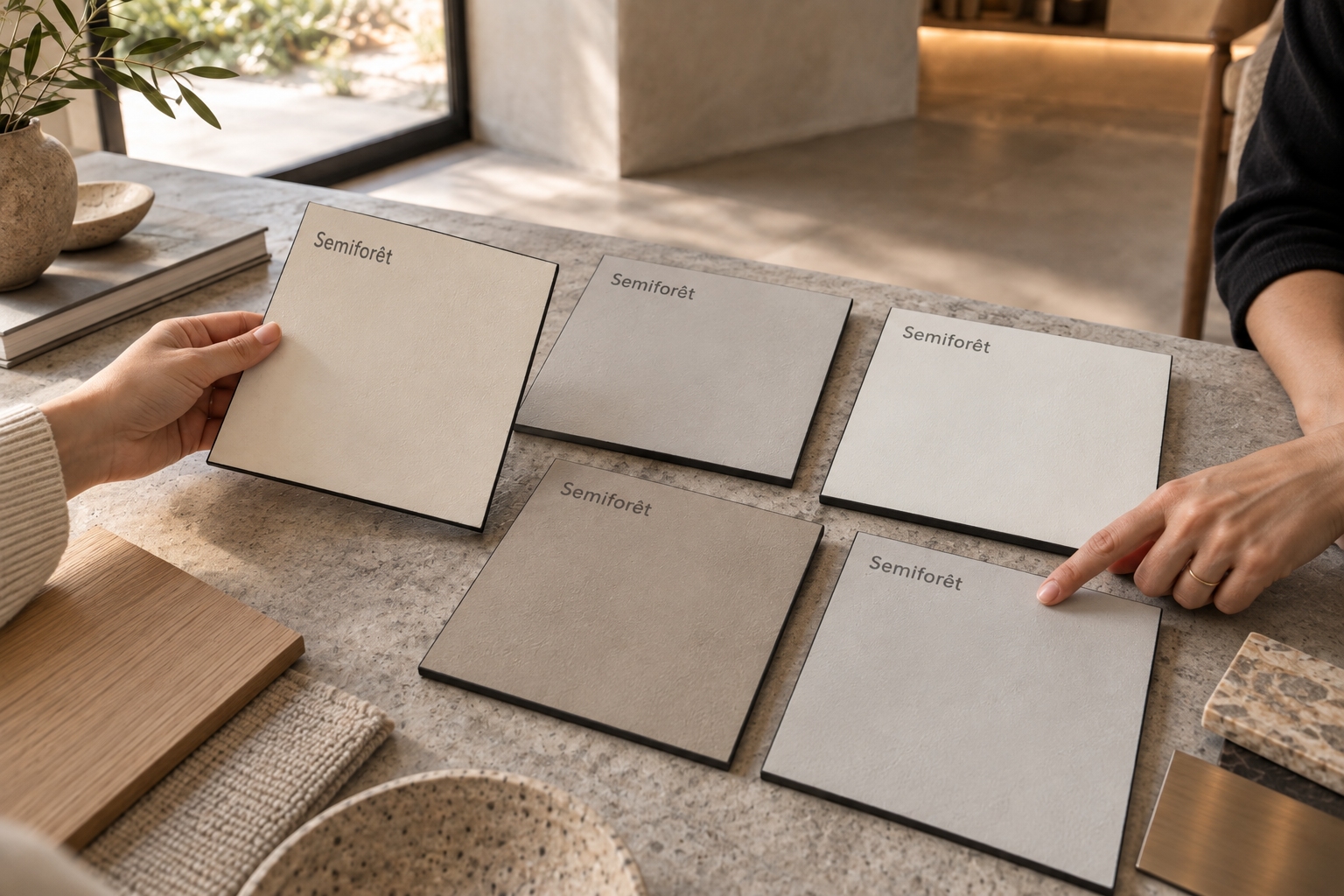
How to Approve a Microcement Sample: Colour, Texture and Lighting
Learn how to review a microcement sample for colour, texture, movement and lighting before approving a finish for walls, floors or built-in surfaces.

How to Choose a Microcement Contractor in Singapore
Learn what to check when choosing a microcement contractor in Singapore, from substrate assessment and samples to scope, protection and handover.
How Long Does Microcement Installation Take? Timeline for Floors, Bathrooms and Renovations
Microcement installation involves several stages rather than one coat. Learn how substrate preparation, flooring area, bathrooms, detailing and curing affect the total project timeline.
How Is Microcement Installed? Step-by-Step From Substrate Preparation to Final Protection
Microcement is installed as a multi-stage surface system, not a single coat. Learn how substrate assessment, repairs, preparation, reinforcement, decorative layers and final protection work together.
Can Microcement Go Over Self-Levelling Compound? What to Check Before Installation
A flat self-levelling surface is not automatically a suitable microcement substrate. Learn why bonding, thickness, cracks, strength and the floor underneath all matter.
What Is the Best Substrate for Microcement? Tiles, Screed, Concrete and Existing Walls Explained
The best microcement substrate is not one material type — it is a stable, suitable and properly prepared surface. Learn how tile, screed, concrete and existing walls should be assessed.
Does Microcement Need Mesh? Why Reinforcement and Substrate Preparation Matter
Reinforcement mesh can form part of a microcement preparation system, but it is not a universal crack guarantee. Learn how mesh, substrate stability, existing tiles and preparation work together.
How Thick Is Microcement? Why Thickness Alone Does Not Determine Performance
Microcement is a thin surface system, but thicker does not automatically mean stronger. Learn how 3–4 mm build-up, substrate condition, floor levels and preparation affect performance.
What Is Microcement Made Of? Understanding the Layers Behind the Finish
Microcement is more than a thin cement coat. Learn how the substrate, preparation, decorative mineral layers and protective finishing work together to create the completed surface.
Microcement for Hotels, Restaurants and Hospitality Spaces in Singapore
Microcement can be considered for selected hotel, restaurant and hospitality surfaces. Learn how traffic, food and beverage exposure, wet areas, cleaning and operating conditions affect the final specification.
Microcement for Offices in Singapore: Reception Areas, Feature Walls and Workplace Floors
Microcement can be considered for selected office floors, reception areas and feature walls. Learn how traffic, furniture movement, substrate condition, cleaning and fit-out sequencing affect workplace applications.
Can Microcement Be Applied Over Existing Tiles in Singapore?
Microcement can sometimes be applied over existing tiles — but not every tiled surface should be covered. Learn how tile stability, hollow areas, cracks and substrate condition affect whether an overlay approach is suitable.
Microcement for Retail Stores and Showrooms in Singapore: Design, Traffic and Maintenance
Microcement can create continuous floors and architectural surfaces for retail stores and showrooms. Learn how traffic, substrate, display changes, cleaning and fit-out sequencing affect the final result.
Microcement for Commercial Spaces in Singapore: Retail, Offices, Showrooms and Hospitality
Microcement can be considered for selected commercial floors, walls, washrooms and architectural surfaces. Learn how traffic, substrate condition, cleaning, slip considerations and fit-out planning affect commercial projects.
Microcement for Landed Homes in Singapore: Floors, Bathrooms and Large-Surface Planning
Microcement can be considered for large floors, bathrooms, walls and architectural features in landed homes. Learn how substrate variation, transitions, multiple bathrooms and project sequencing affect planning.
