SEMIFORÊT MICROCEMENT / SINGAPORE
Microcement
Bathrooms
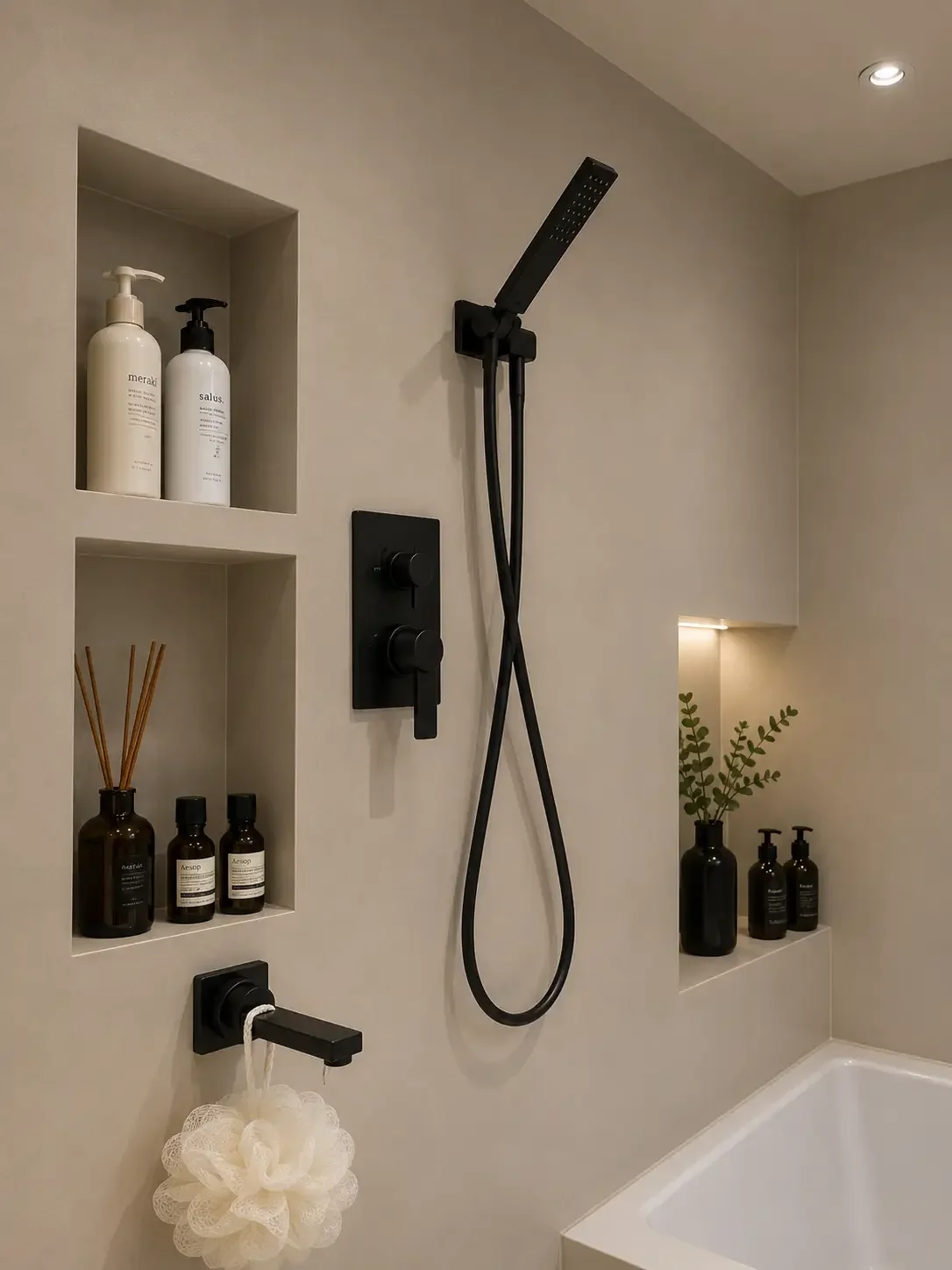
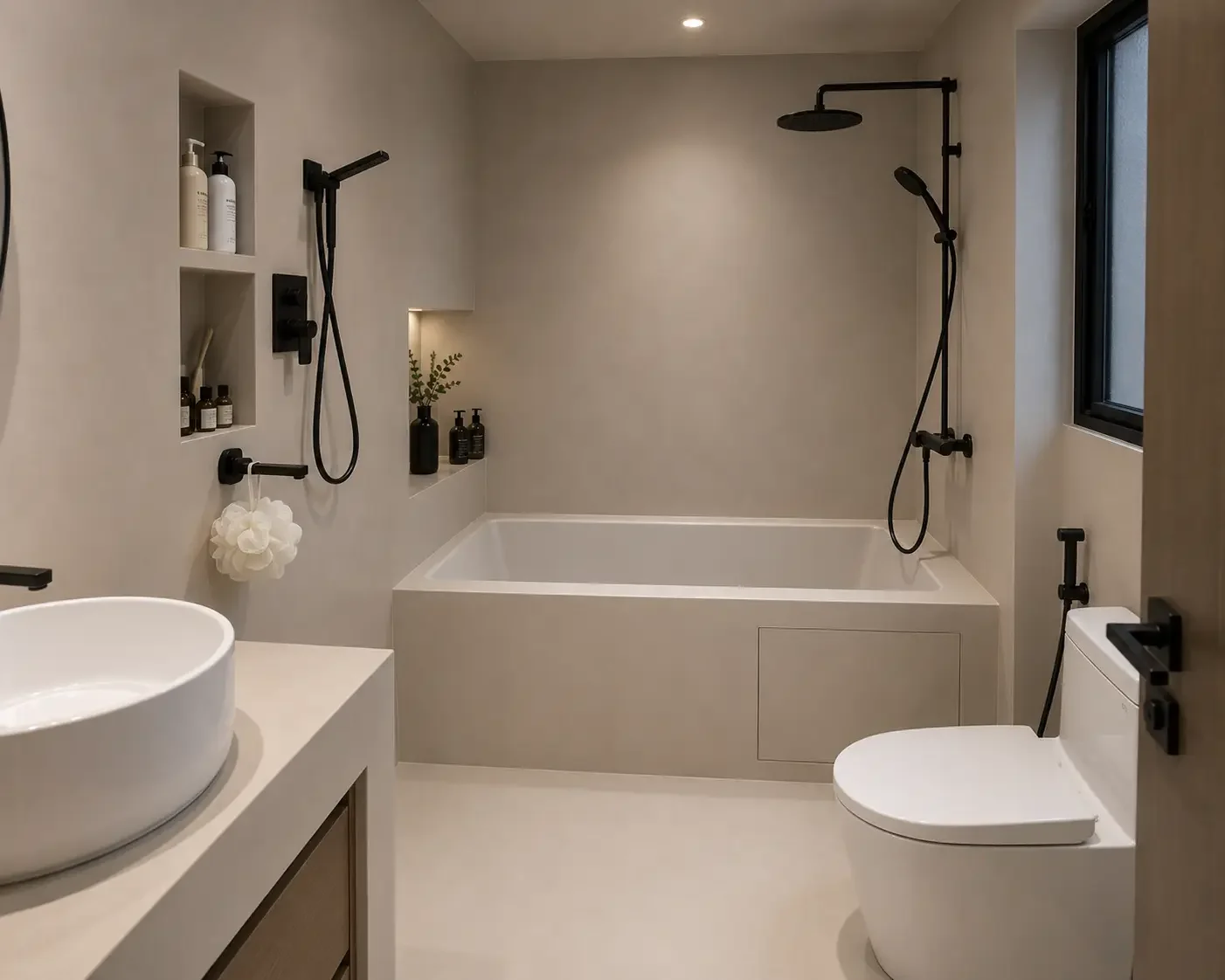
Seamless mineral finishes for bathroom walls, floors and wet areas, designed around the relationship between substrate, detailing, material character and final protection.
01 / DEFINITION
A Continuous
Surface for
Wet Areas.
The bathroom becomes quieter when walls, floors and built forms speak one material language.
Microcement is a thin decorative surface system applied over suitable prepared substrates to create a visually continuous mineral finish.
In wet areas, the visible finish should be understood as part of a wider system that includes substrate condition, preparation, waterproofing requirements, detailing, protective finishing and curing.
Explore Microcement Renovation02 / MATERIAL LANGUAGE
Colour.
Texture.
Atmosphere.
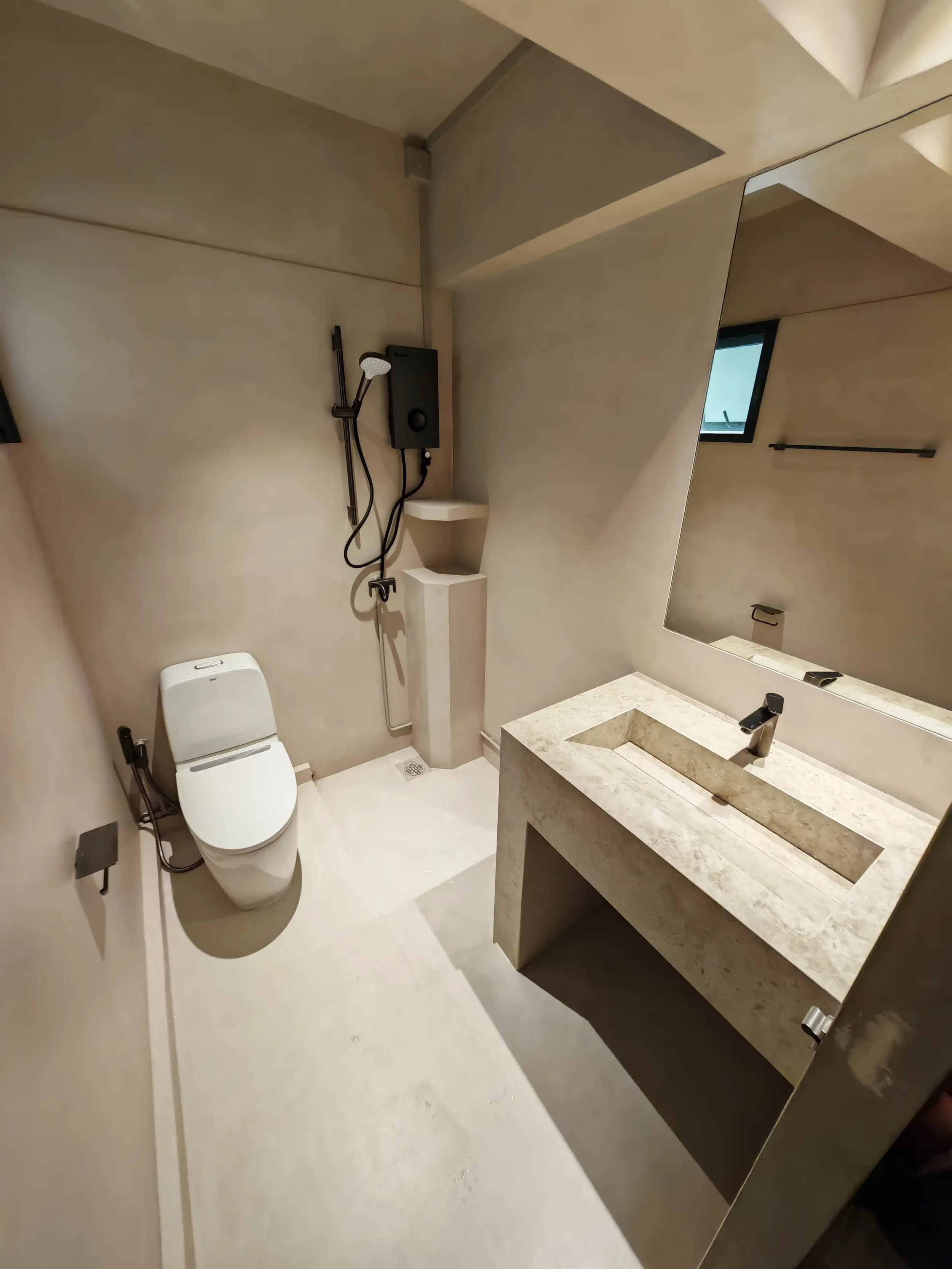
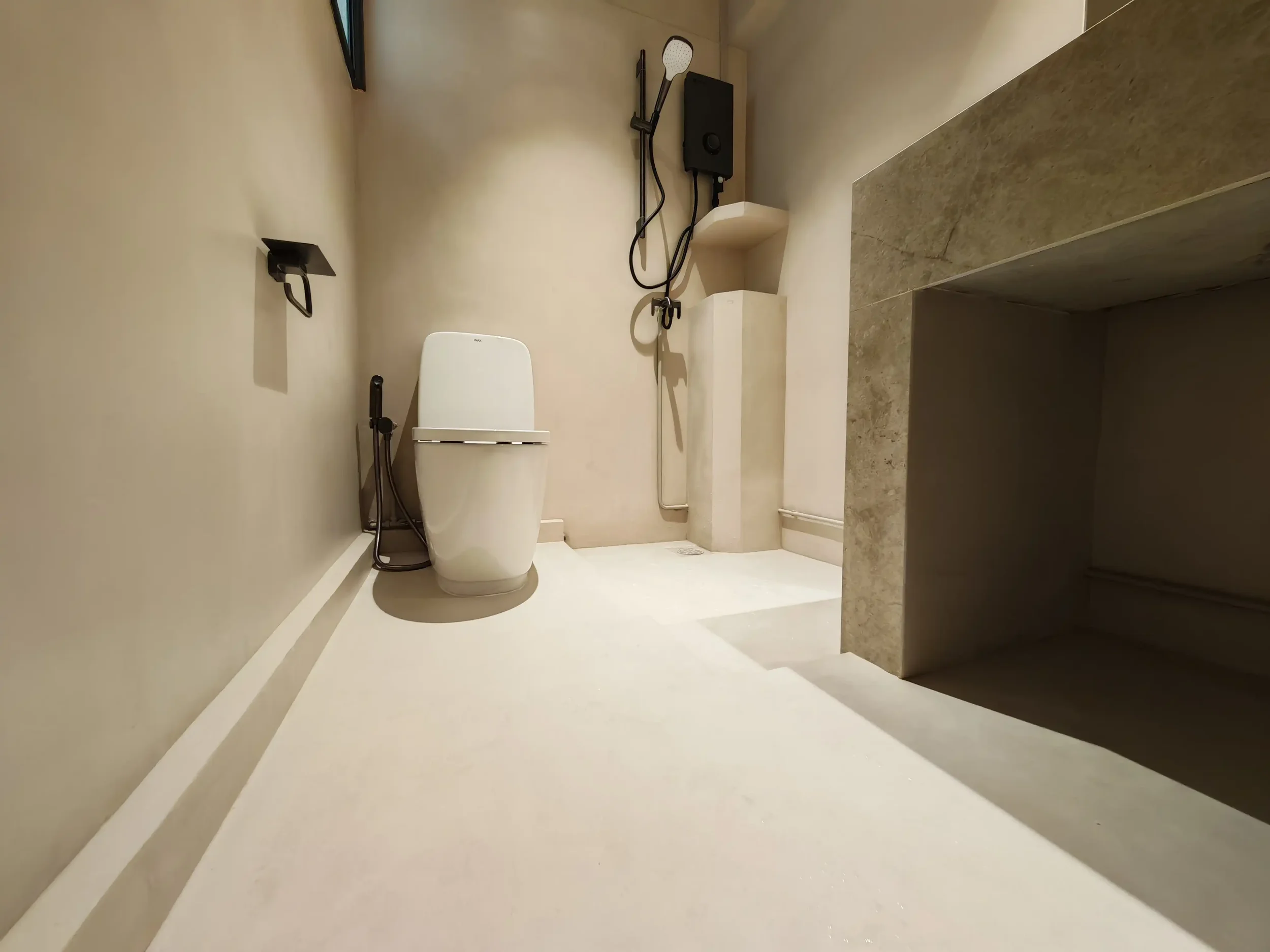
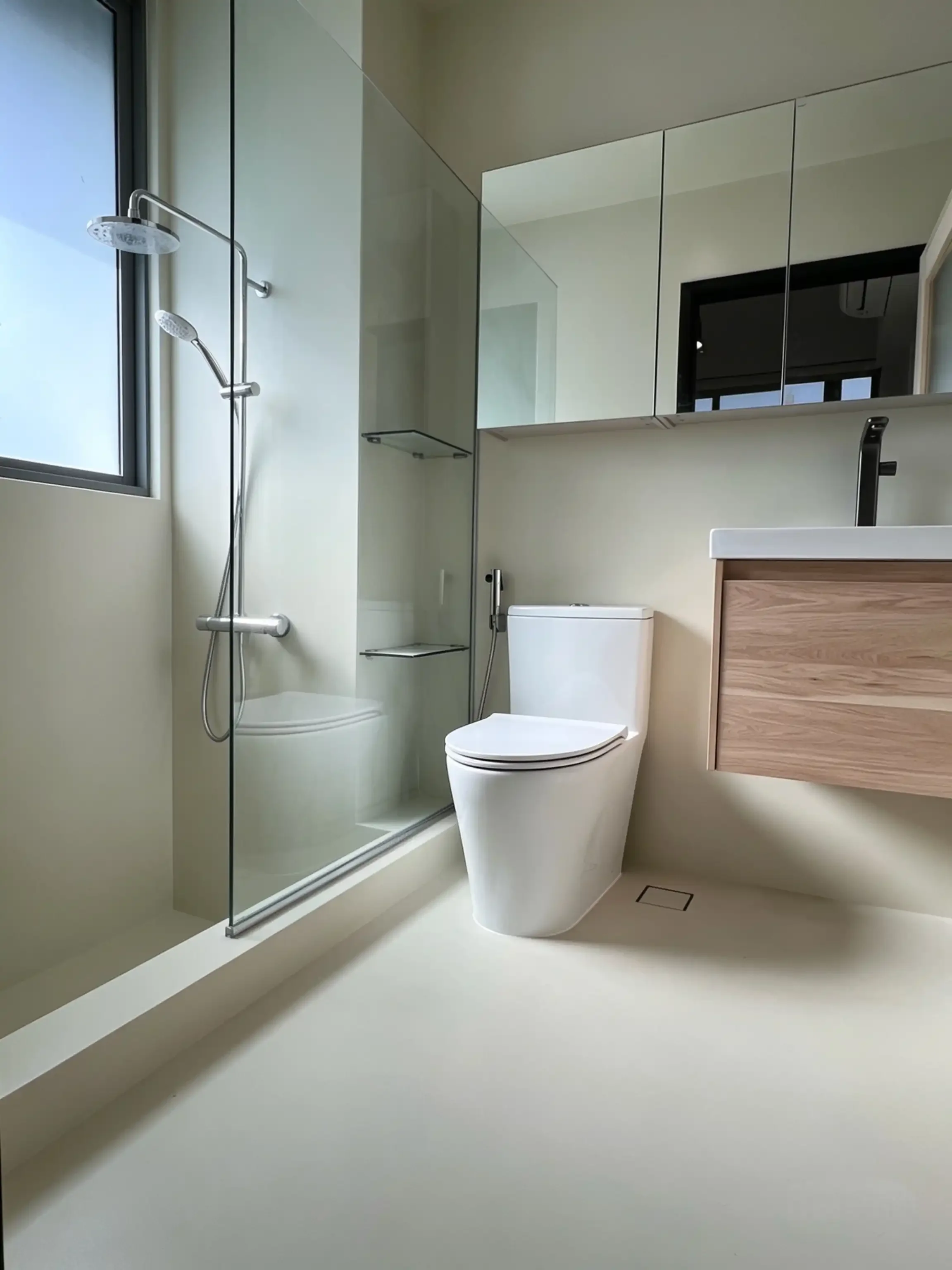
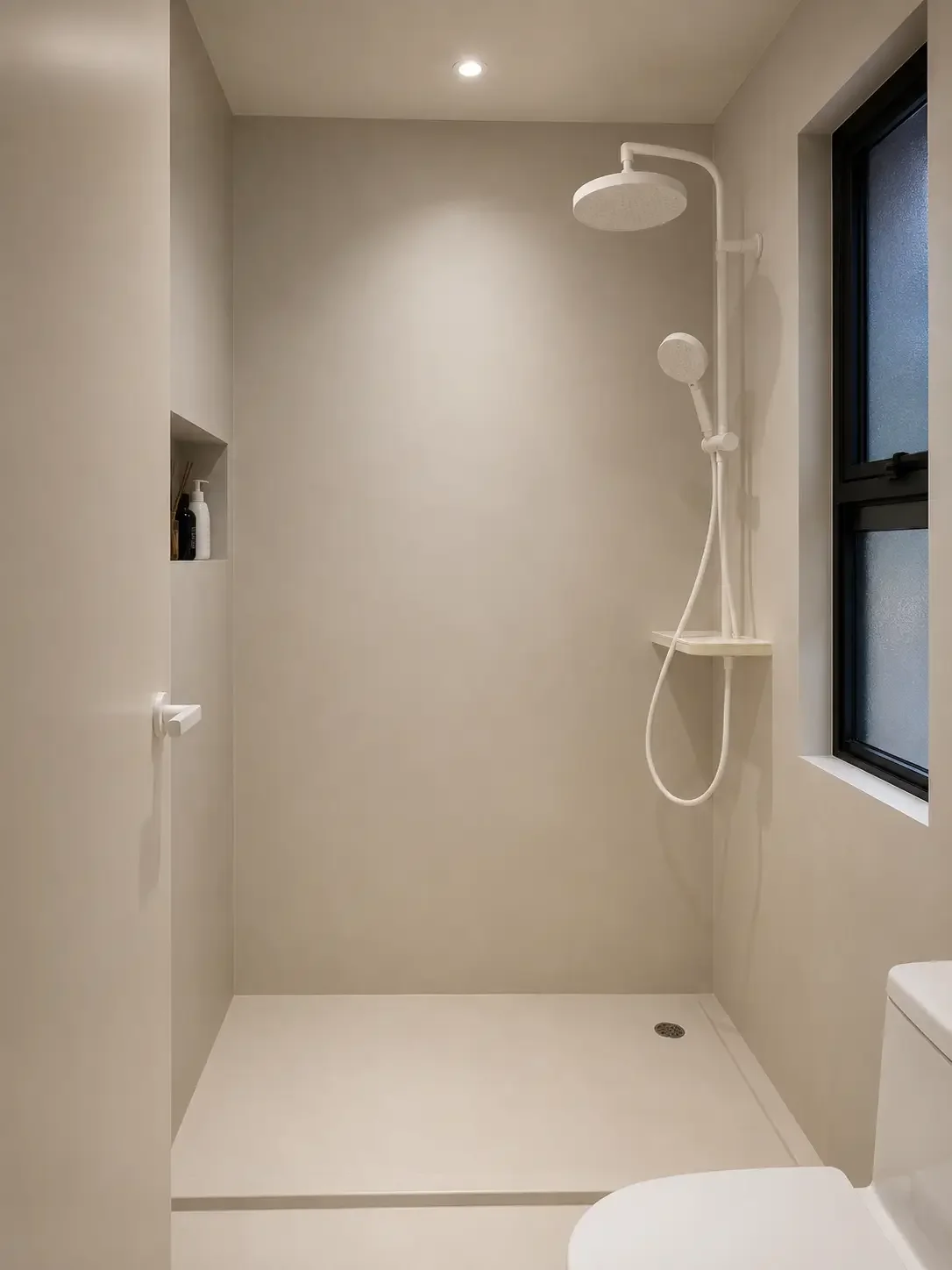
Microcement does not rely on repeated decorative pattern. Its character comes from mineral tone, hand-applied movement, surface texture and the way light moves across the room.
Warm Minimalism
Soft ivory and warm mineral tones create quieter bathrooms that work naturally with timber, stone, warm light and restrained fittings.
Architectural Grey
Grey and stone-inspired tones create a stronger architectural character suited to dark hardware, clean geometry and contemporary interiors.
Wabi-Sabi
Gentle tonal variation and controlled trowel movement introduce depth without visual noise, allowing the surface itself to shape the atmosphere.
03 / FEATURED SINGAPORE PROJECT
Material
in Motion.
Finished surfaces are better understood in movement than through a sample alone. Project films reveal scale, light, texture and the relationship between adjoining surfaces within the completed space.
RESIDENTIAL / HDB
Pasir Ris HDB
Two Bathrooms.
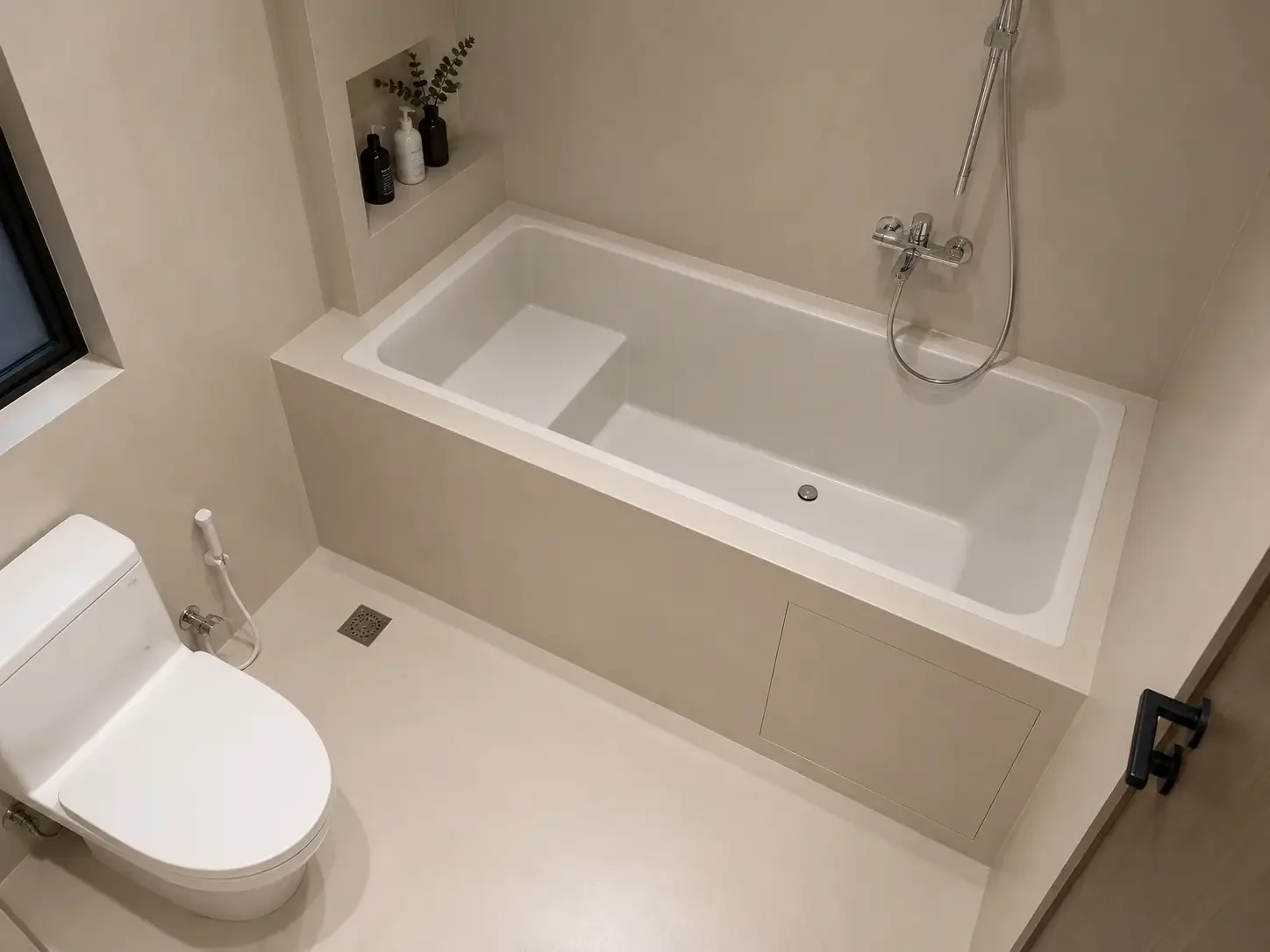
Wabi Sabi White microcement extends across two HDB bathrooms, including the walls, floors and a microcement-finished bathtub in the master bathroom.
View Full Case Study04 / PROJECT FILMS
Different
Wet-Area
Contexts.
Residential and commercial wet areas place different demands on the finished surface. These project films provide additional references across landed and public environments in Singapore.
Residential / Landed
Novena Villa
Three bathrooms finished in Ivory White, carrying one restrained mineral language across separate wet-area spaces within the residence.
Singapore Project ArchiveCommercial / Public Washrooms
Holland Road
Petrol Station
Distinct colour combinations were used across the male and female public washrooms while retaining one continuous microcement material language.
View Full Case Study05 / APPLICATIONS
One Material.
Multiple
Surfaces.
A bathroom may use microcement selectively or across several adjoining surfaces. Each application requires its own substrate and detailing assessment.
06 / THE SEMIFORÊT SYSTEM
Performance
Begins Below
the Finish.
The visible microcement layer is only one part of a wet-area surface system. Existing conditions, substrate preparation, detailing, application and final protection all influence the completed result.
Assessment
Review existing tiles, substrate stability, cracks, movement and wet-area conditions.
Preparation
Address relevant substrate conditions and establish a suitable prepared working surface.
Application
Build the specified microcement system through controlled multi-layer application.
Protection
Apply the specified protective finish according to environment and intended use.
Curing
Allow the completed system appropriate curing before normal wet-area use.
07 / MATERIAL EVIDENCE
Claims Need
Evidence.
Selected material claims can be traced back to third-party laboratory reports.
Tested Sample
GB/T 1741-2007
GB 8624-2012
Results relate to tested samples and cited test methods. They should not be interpreted as a standalone guarantee for every installed project condition.
View Technical Evidence & Test Reports09 / QUESTIONS
Bathroom
Questions.
Is microcement suitable for bathrooms?
Can microcement cover existing bathroom tiles?
Is microcement itself the waterproofing layer?
Does bathroom microcement crack?
Can walls, floors and a bathtub use the same visual finish?
Are Semiforêt technical test reports available?
View Technical Evidence & Test Reports
How do I know which system my bathroom needs?
SEMIFORÊT / SINGAPORE
Begin With
the Space.
Before contacting the team, prepare your property type and area in Singapore, a floor plan or approximate dimensions, and current bathroom photos—including the shower, floor, junctions and visible defects. Explain which surfaces you want to finish, your preferred appearance, planned renovation period and whether the bathroom is currently in use. Describe the project through the contact page and ask which channel to use for plans and photos. An initial discussion is not a confirmed specification, quotation or installation date.